Construction sites, mines, ports, and factory floors all run on hydraulic power, but no two of them run the same way. That’s exactly why so many businesses turn to hydraulic power pack manufacturers instead of buying an off-the-shelf unit.
A custom power pack is built around one machine’s exact pressure, flow rate, and space limits, not a general average. A mismatched unit wastes energy, wears out early, or simply can’t do the job.
This article walks through the industries that depend on custom hydraulic power packs, why standard units fall short for them, and what to check before choosing a manufacturer.
What Is a Hydraulic Power Pack?
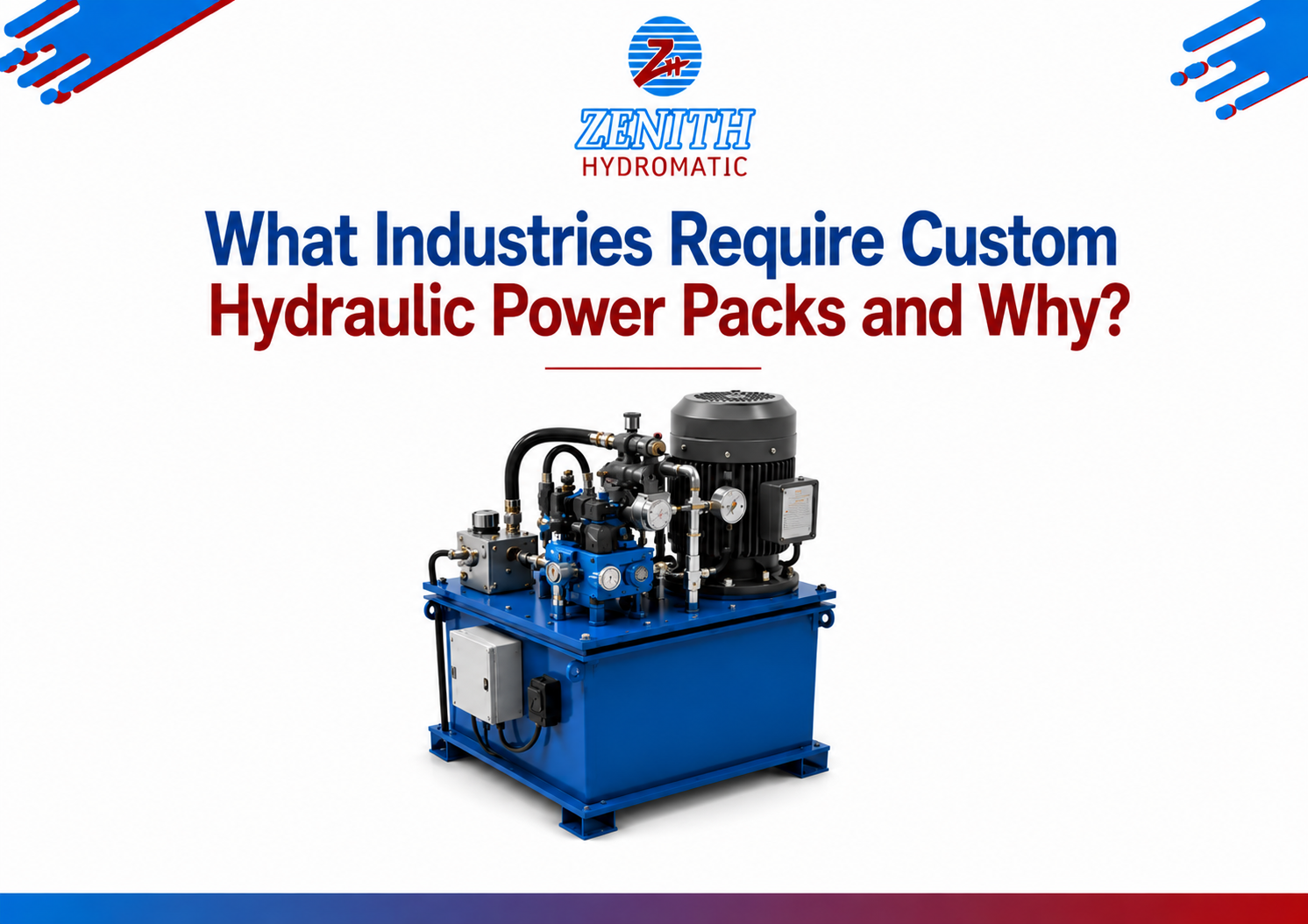
A hydraulic power pack is a self-contained unit that generates and controls hydraulic power for a machine. It typically includes a motor, pump, reservoir, valves, and filters working together to push fluid at a set pressure and flow rate.
Think of it as the engine room for a hydraulic system. Instead of building a power source into every machine separately, manufacturers install one compact unit that drives cylinders, lifts, or presses on demand.
Why Industries Choose Custom Power Packs Over Standard Units
Standard, catalog power packs work fine for simple, low-demand tasks. Most industrial applications need something built around their own constraints instead.
Here’s what usually pushes a business toward a custom build:
- Space limits: equipment often has an oddly shaped compartment, so the power pack has to fit around it, not the other way round
- Unusual pressure or flow needs: a stone crusher and a scissor lift don’t need the same output
- Harsh environments: dust, heat, moisture, and vibration all affect which components hold up
- Duty cycle: machines running continuously need different pumps and cooling than ones used occasionally
- Safety and compliance: some industries require certified components and fail-safe features from the start
Industries That Rely on Custom Hydraulic Power Packs
With those reasons in mind, here’s a closer look at the sectors where custom hydraulic power packs are practically the standard, not the exception.
Construction and Earthmoving Equipment
Excavators, cranes, and compactors depend on hydraulic power to lift, dig, and move heavy loads all day. A custom power pack is sized to match engine output and duty cycle, so the machine doesn’t stall under load or overheat on long shifts.
Because construction sites vary so much in terrain and climate, sealed and dust-resistant designs are common here.
Material Handling Equipment
Scissor lifts, dock levellers, stackers, and goods lifts rely on power packs sized for controlled, repeatable motion rather than raw force. A warehouse goods lift needs smooth, slow movement for safety, while a stacker needs a quicker response.
This is one of the biggest reasons logistics and manufacturing companies work directly with a manufacturer rather than adapting a generic unit, since even small timing differences affect worker safety.
Mining and Metallurgical Industry
Mining equipment runs in extreme conditions, including heat, dust, vibration, and long uninterrupted hours. Power packs built for this sector typically use reinforced seals, heavy-duty filtration, and larger reservoirs so they can run continuously without frequent servicing.
Metallurgical plants have similar needs, especially around high-pressure presses and rolling equipment.
Oil and Gas Sector
Oil and gas operations use hydraulic power for blowout preventers, valve actuation, and drilling controls, where failure isn’t an option.
This sector remains one of the largest users of hydraulic power worldwide. Market research from GlobalGrowthInsights estimates oil and gas accounts for roughly 30% of the global hydraulic power pack market, largely due to ongoing exploration and extraction activity.
Because uptime is critical, power packs for this sector are usually built with redundant safety systems and rated for extreme pressure.
Marine and Shipbuilding
Ships and offshore platforms use hydraulic power packs for steering gear, winches, and cargo handling. Saltwater exposure means corrosion-resistant materials and sealed enclosures aren’t optional, they’re a baseline requirement.
Agriculture Machinery
Tractors, balers, and harvesters use hydraulic power to lift attachments and adjust implements in the field. Farm equipment needs power packs rugged enough for dust and rough terrain, but still priced for typical agricultural budgets.
Automotive and Press Applications
Vehicle assembly lines and metal stamping presses need precise, repeatable hydraulic force. A custom power pack here focuses on accuracy and cycle speed, since even a small delay slows an entire production line.
Power Generation and Renewable Energy
Turbines, valve actuators, and cooling systems in power plants rely on hydraulic power packs for safe, controlled operation. Renewable installations, including wind turbine pitch control systems, increasingly use compact, energy-efficient units to help cut operating costs.
What Makes a Power Pack “Custom”?
A handful of core specifications separate a custom build from an off-the-shelf unit. Getting these right early avoids costly rework later.
| Factor | Why It Matters |
| Motor type (AC/DC) | Matches available power supply and duty needs |
| Flow rate (GPM/LPM) | Determines how fast a cylinder or actuator moves |
| Operating pressure (Bar/PSI) | Sets how much force the system can generate |
| Reservoir size | Affects cooling, filtration, and continuous run time |
| Enclosure and sealing | Protects against dust, moisture, and temperature extremes |
| Control valves | Governs precision, speed, and safety cutoffs |
Choosing the Right Hydraulic Power Pack Manufacturer
Getting the specs right matters, but picking the right manufacturer matters just as much. A few things worth checking before signing off on a supplier:
- Experience with your industry’s specific demands, not just general hydraulics
- In-house design and testing, so changes don’t need to go through a third party
- Certifications relevant to your sector, such as ISO or CE
- After-sales support and spare parts availability
- Realistic turnaround time for prototypes and repeat orders
Many businesses across India work with hydraulic power pack manufacturers that handle design, testing, and after-sales support in-house, which shortens lead times considerably.
Companies searching for hydraulic power pack manufacturers in Ahmedabad often prioritize local support too, since faster response times matter when equipment goes down mid-shift.
FAQs
What is the difference between a standard and a custom hydraulic power pack?
A standard unit is built to general specifications and sold off the shelf. A custom unit is designed around one machine’s specific pressure, flow, space, and environmental requirements.
Which industries use hydraulic power packs the most?
Construction, material handling, mining, oil and gas, marine, agriculture, and manufacturing are the biggest users. Almost any industry with heavy lifting or pressing equipment relies on them in some form.
How long does it take to build a custom hydraulic power pack?
Timelines vary with complexity, but most manufacturers need several weeks for design, testing, and fabrication. Modifying an existing design usually moves faster.
Can a hydraulic power pack be repaired instead of replaced?
Yes. Many issues, such as worn seals, pump wear, or valve failure, can be repaired if the unit is serviced regularly and parts are available.
What size hydraulic power pack does my machine need?
It depends on the required flow rate, pressure, and duty cycle. A manufacturer typically reviews your machine’s specifications before recommending a size.
Are hydraulic power packs energy efficient?
Modern units, especially those with variable-speed drives, are considerably more efficient than older fixed-speed designs, cutting energy use during idle or low-demand periods.
Do hydraulic power packs need regular maintenance?
Yes. Routine checks on fluid levels, filters, seals, and hoses extend service life and help prevent unexpected downtime.
Why do businesses choose local hydraulic power pack manufacturers?
Local manufacturers, including hydraulic power pack manufacturers in Ahmedabad, offer faster turnaround for repairs, easier communication during design changes, and lower shipping costs for large equipment.
Key Takeaways
- Custom hydraulic power packs are built around a machine’s exact pressure, flow, and space needs, not generic averages
- Construction, material handling, mining, oil and gas, marine, agriculture, and manufacturing are the industries that rely on them most
- Oil and gas alone accounts for close to 30% of global demand, according to industry research
- Key custom specs include motor type, flow rate, pressure rating, reservoir size, and sealing
- Choosing an experienced manufacturer with in-house testing and after-sales support reduces downtime and delays
Conclusion
Every industry covered here needs hydraulic power for a different reason, but they all share one thing: a standard unit rarely fits the job perfectly.
The right custom power pack keeps equipment running longer, safer, and closer to its actual design capacity.
If you’re evaluating options, it helps to work through your machine’s exact specifications before settling on a supplier. If you’re looking for expert guidance, consulting experienced hydraulic power pack manufacturers like Zenith Hydromatic can help you match the right system to your equipment and avoid costly guesswork.