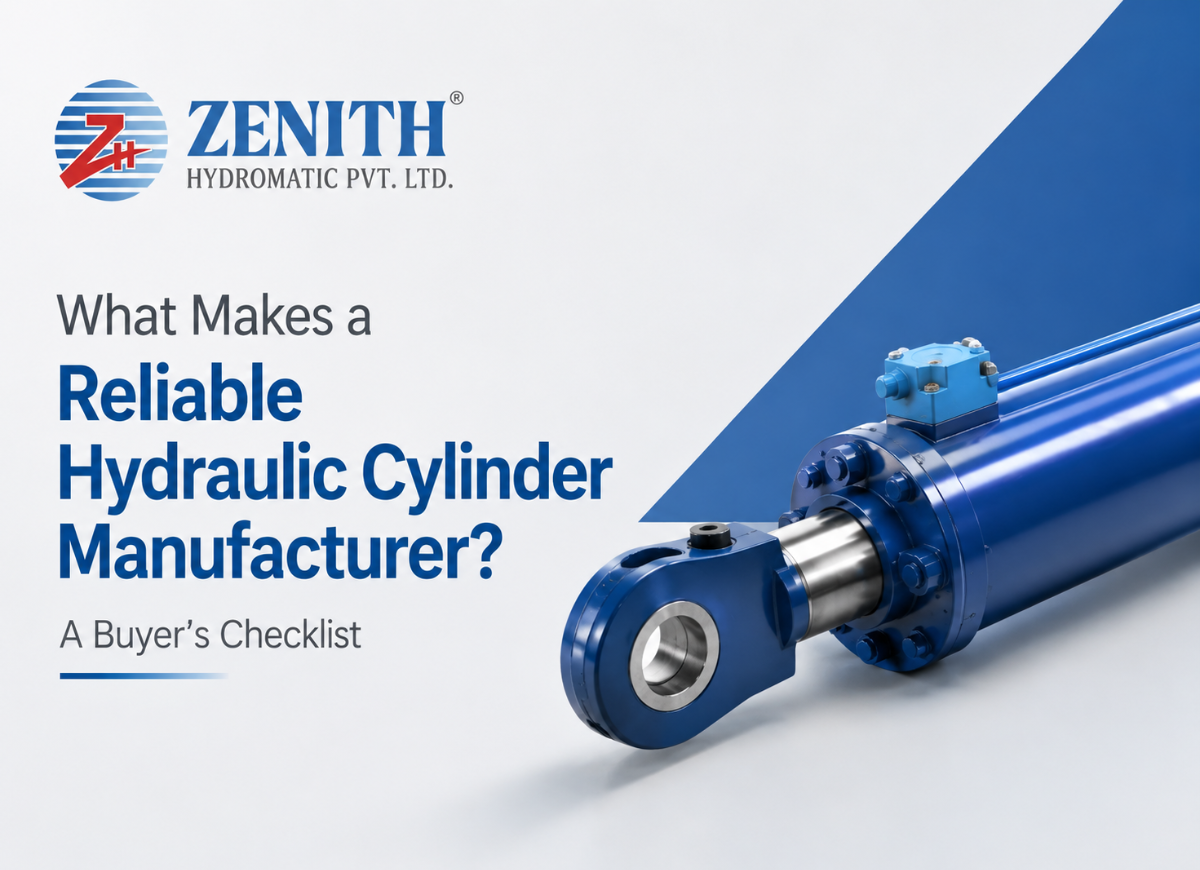
Picking between hydraulic cylinder manufacturers can feel like comparing near-identical quotes. Most suppliers claim quality, fast turnaround, and dependable support, but only some actually deliver once the order is placed.
Reliability isn’t something you can judge from a price sheet. It shows up in certifications, testing records, communication, and how a supplier handles problems after the sale, not before it.
This checklist walks through what actually separates a dependable manufacturer from one that just sounds dependable, so you know what to check before signing a purchase order.
Why Manufacturer Reliability Matters More Than Price
A cheaper cylinder that fails early costs more than the money saved on the original order. Rework, downtime, and repeat inspections add up fast.
This isn’t unique to hydraulics. McKinsey’s research on manufacturing quality has found that companies with weak quality systems and limited supplier oversight often carry defect rates far above what a mature quality culture would allow, along with the rework and warranty costs that come with it.
A reliable manufacturer costs more to evaluate upfront, mainly in time. It almost always costs less over the life of the equipment.
The good news is that reliability leaves a paper trail. Certifications, test records, and past project references are all things you can actually check, rather than take on faith.
The Buyer’s Checklist: What to Look For
Use this as a working checklist when comparing suppliers, not just a list to skim once.
Quality Certifications and Standards
Ask for proof of certification, not just a claim. ISO 9001 is the internationally recognized standard for quality management systems, and manufacturers certified against it are expected to follow documented, auditable processes rather than relying on informal quality checks.
In-House Design and Engineering Capability
Manufacturers who handle design and engineering internally can make changes faster and troubleshoot issues without waiting on a third party. Outsourced design usually means slower revisions.
Testing and Quality Control Process
Ask specifically what testing happens before a cylinder ships: pressure testing, leak testing, and dimensional checks should all be standard, not optional add-ons.
Material Traceability and Sourcing
A reliable manufacturer can tell you where the steel, seals, and other core materials come from, and can trace a batch back to its source if a defect shows up later.
Manufacturing Capacity and Lead Times
A manufacturer promising unrealistically short lead times on a complex custom order is worth questioning. Ask about current capacity and how they handle unexpected delays.
After-Sales Support and Spare Parts
Reliability doesn’t end at delivery. Confirm warranty terms, spare parts availability, and how quickly the manufacturer responds when something needs servicing.
Industry-Specific Experience
A manufacturer with strong experience in construction equipment won’t necessarily understand the demands of marine or food-grade applications. Ask for references relevant to your specific use case.
Communication and Transparency
How a supplier handles questions during the quoting stage is a good preview of how they’ll handle problems later. Vague answers now usually mean vague answers during a dispute.
Financial Stability
A technically capable manufacturer in financial distress is still a risk. Sudden closures or ownership changes can leave a buyer without support mid-project. Basic checks like years in business and facility investment patterns can offer useful signals here.
Environmental and Safety Compliance
Manufacturers working with hydraulic systems should follow recognized safety practices in their own facilities, not just in the products they ship. This often reflects how seriously they take quality overall.
Red Flags to Watch For
A few warning signs are worth taking seriously during supplier evaluation.
- Reluctance to provide certification documents or test reports on request
- Quotes significantly below competitors with no clear explanation why
- No clear point of contact for after-sales issues or warranty claims
- Inability to provide references from similar past projects
- Pressure to sign quickly without time to review specifications properly
- Frequent changes in ownership, management, or facility location without clear explanation
Questions to Ask Before Signing a Contract
A short list of direct questions can reveal more than a glossy brochure.
- Can you share your ISO certification and a recent third-party audit summary?
- What testing happens before a unit ships, and can we see a sample report?
- How do you handle a defect discovered after installation?
- What’s your average lead time for repeat orders versus first-time custom builds?
- Can you provide two or three references from a similar industry?
- What happens if our order volume changes significantly after the first year?
Why This Matters More in India’s Growing Market
Demand for domestically manufactured hydraulic components has grown quickly, which means more suppliers competing for the same orders, not all of them equally established.
Buyers evaluating hydraulic cylinder manufacturers in india specifically benefit from applying this checklist carefully, since the range of manufacturer maturity varies more widely than in more consolidated markets.
Established manufacturers with export experience tend to have already built the certification and testing infrastructure this checklist covers, which is often a faster way to shortlist serious suppliers.
It’s also worth checking whether a manufacturer serves both domestic and export markets. Export-facing suppliers usually maintain stricter documentation and testing standards, since international buyers tend to ask for them upfront.
Established vs Newer Manufacturers
Buyers sometimes assume a newer manufacturer must be less reliable, or that an older one is automatically better. Neither assumption holds up consistently.
Established manufacturers usually have a longer track record to check, more references available, and processes that have already been tested through repeat orders. That history is genuinely useful during evaluation.
Newer manufacturers can still pass the same checklist, especially if their team brings experience from established companies. The checklist matters more than how long a company has existed, but a longer history does make verification easier.
FAQs
What certifications should a hydraulic cylinder manufacturer have?
ISO 9001 for quality management is the baseline most buyers look for. Depending on your industry, additional certifications like CE marking or sector-specific approvals may also be relevant.
Is the cheapest quote ever the right choice?
Sometimes, but only if it comes with the same testing, certification, and support as higher-priced options. A large price gap usually signals a difference in quality processes somewhere in the build.
How can I verify a manufacturer’s certifications are genuine?
Ask for the certificate number and issuing body, then check directly with the certification body if needed. Reputable manufacturers won’t hesitate to share this.
What’s the biggest red flag when evaluating a supplier?
Reluctance to share test reports or certification documents is one of the clearest warning signs, since a reliable manufacturer should have these readily available.
Should I ask for references before placing a large order?
Yes. References from similar industries or applications tell you far more about real-world performance than a sales conversation.
Does manufacturer size affect reliability?
Not directly. Smaller manufacturers can be highly reliable if they have strong quality processes, while larger ones aren’t automatically better. The checklist matters more than company size.
Key Takeaways
- Reliability shows up in certifications, testing records, and after-sales support, not just price
- ISO 9001 certification is a useful baseline for evaluating quality management practices
- Ask direct questions about testing, defect handling, and lead times before signing a contract
- Reluctance to share documentation or references is one of the clearest warning signs
- India’s growing manufacturer base makes careful evaluation more important, not less
Conclusion
A reliable hydraulic cylinder manufacturer rarely needs to convince you they’re reliable. Their certifications, testing records, and past references usually do that on their own.
Running through this checklist takes a bit more time upfront than accepting the lowest quote. It’s time that usually pays for itself the first time something needs to be serviced correctly, or doesn’t need servicing at all.
If you’re evaluating suppliers for an upcoming order, working with an experienced manufacturer like Zenith Hydromatic can help you compare specifications and quality processes without the guesswork.