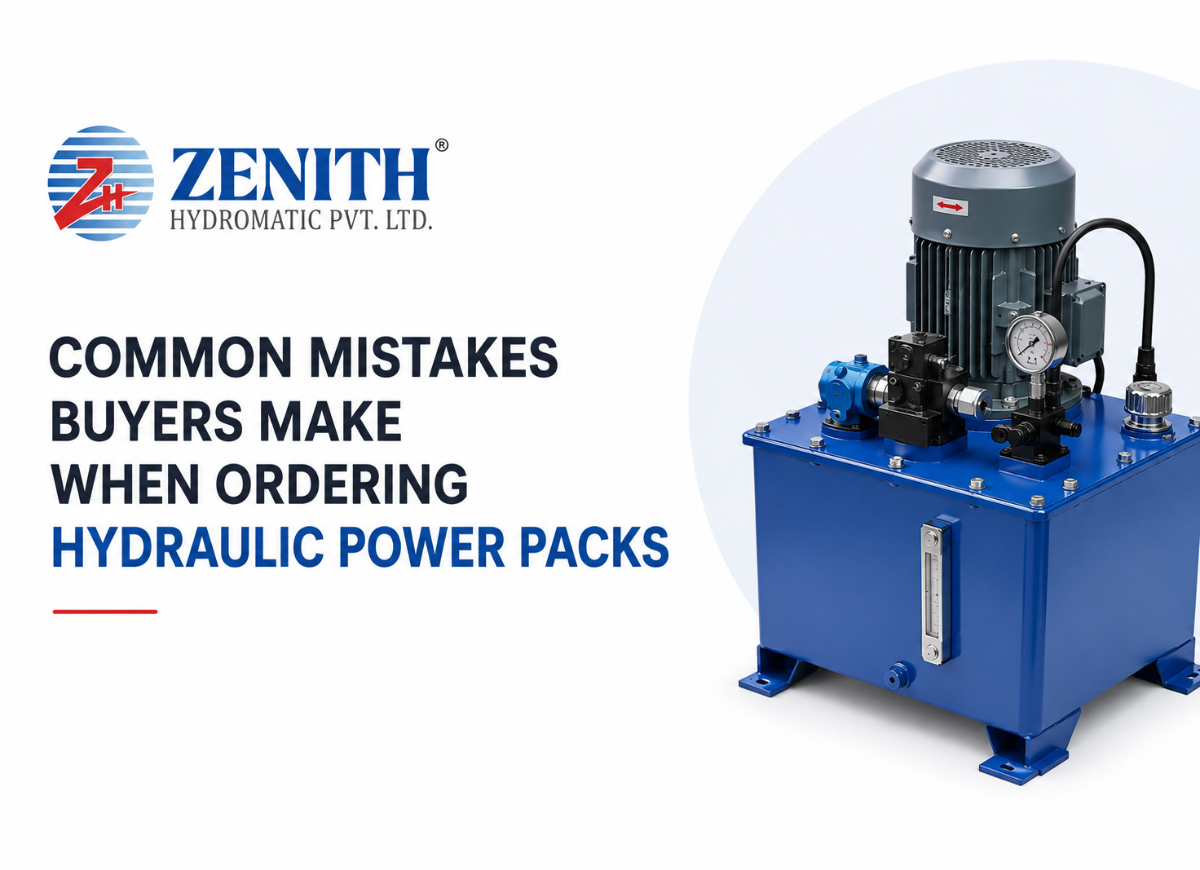
Ordering a hydraulic power pack looks straightforward on paper: pick a pressure rating, a flow rate, and place the order. In practice, small oversights at this stage cause most of the problems that show up months later.
Most issues buyers run into with hydraulic power pack manufacturers trace back to the order itself, not the manufacturing. Missing details, unclear operating conditions, or decisions based on price alone all lead to units that underperform once installed.
This article covers the mistakes that come up most often, why they matter, and what to check before you place your next order.
Why Getting the Order Right Matters
A mismatched power pack rarely fails on day one. It runs, just not as well as it should, and the real cost shows up later in wear, energy waste, or an unplanned stoppage.
Unplanned downtime is expensive across manufacturing generally. Siemens’ research on the true cost of downtime found that unplanned downtime costs large industrial companies an average of $129 million a year per plant, a figure that has climbed sharply in recent years.
A hydraulic power pack ordered without the right specifications is one of many contributors to that kind of loss. Getting the order right the first time is far cheaper than fixing it after installation.
None of this means every order needs to be complicated. It just means a handful of details, gathered upfront, make the difference between a unit that performs well for years and one that needs constant attention.
Common Mistakes Buyers Make
Most ordering mistakes aren’t technical failures. They’re gaps in the information shared before the build even starts.
Not Specifying the Actual Load and Duty Cycle
Buyers sometimes order based on a rough estimate of pressure and flow instead of the machine’s real operating data. A power pack sized for occasional use will wear out fast if the machine actually runs continuously.
Ignoring the Operating Environment
Heat, dust, humidity, and chemical exposure all affect seal and material choice. A unit built for a clean indoor factory won’t hold up the same way on an outdoor construction site.
Choosing Based on Price Alone
The cheapest quote often reflects lower-grade components or reduced testing, not better efficiency. That gap tends to show up as increased maintenance cost within the first year or two.
Skipping Safety and Standards Compliance
Hydraulic systems used in industrial machinery are expected to meet recognized safety requirements, such as ISO 4413, which covers general rules and safety requirements for hydraulic fluid power systems. Buyers who skip asking about compliance risk both safety issues and problems during equipment audits or inspections.
Underestimating Reservoir Size and Cooling Needs
A reservoir that’s too small struggles to dissipate heat, which shortens fluid life and stresses seals. This is an easy detail to overlook when comparing quotes on price alone.
Not Asking About After-Sales Support
Buyers often focus entirely on the initial build and skip questions about spare parts, warranty terms, and repair turnaround. That gap becomes a problem the first time something needs servicing.
Overlooking Space and Noise Constraints
A power pack that performs well on paper can still be the wrong choice if it doesn’t fit the available space or exceeds noise limits for the work environment.
Sharing Incomplete Technical Drawings
Vague or incomplete specifications force manufacturers to guess or ask for revisions later, which adds delays. Sharing complete drawings and operating parameters upfront avoids most of this back-and-forth.
Assuming One Standard Design Fits Every Machine
It’s tempting to reuse a specification that worked well on a previous machine. But even small differences in mounting orientation, ambient temperature, or cycle frequency can mean the same design underperforms elsewhere.
Not Planning for Future Capacity Needs
Ordering a power pack sized exactly for today’s output leaves no room if production demand increases. A small buffer in flow capacity is usually cheaper to build in now than to retrofit later.
Assuming Verbal Agreements Cover the Details
Specifications discussed on a call but never confirmed in writing tend to get lost or misremembered somewhere in the process. Getting the final specification documented, even briefly, avoids disputes over what was actually agreed.
A Quick Pre-Order Checklist
Before submitting an order, it helps to confirm the following details are documented and shared with the manufacturer. Most delays and revisions trace back to one of these being missing or assumed rather than confirmed.
- Required pressure, flow rate, and duty cycle based on actual machine operation
- Operating environment details: temperature range, dust, moisture, or chemical exposure
- Available mounting space and any noise restrictions
- Relevant safety and compliance requirements for your industry
- Reservoir size and cooling requirements for continuous operation
- Warranty terms, spare parts availability, and expected lead times
- Complete technical drawings or a detailed written specification
Most of these details take a single conversation to confirm, but skipping that conversation is exactly how avoidable mistakes make it into a final order.
What to Ask Before You Place an Order
A short conversation before the order goes in can save weeks of back-and-forth later. It also gives you a good read on how thorough a manufacturer actually is, before any money changes hands.
A few questions worth asking directly:
- Can you confirm this specification matches our actual duty cycle, not just the closest standard size?
- What seal and material options do you recommend for our operating environment?
- What testing happens before the unit ships, and can we see a sample report?
- What’s the realistic lead time, including any custom modifications?
- How do you handle spare parts and repairs once the warranty period ends?
Buyers searching for a hydraulic power pack manufacturers in Ahmedabad often prioritize suppliers who ask these questions upfront themselves, rather than waiting to be asked.
FAQs
What’s the most common mistake buyers make when ordering a hydraulic power pack?
Specifying pressure and flow based on rough estimates instead of the machine’s actual load and duty cycle is the most common issue, and it affects almost everything else in the build.
Does choosing the cheapest quote always cost more later?
Not always, but a significantly lower price often reflects reduced component quality or testing, which tends to show up as higher maintenance costs over time.
Why does the operating environment matter so much?
Heat, dust, and chemical exposure directly affect seal and material life. A power pack built for the wrong environment wears out faster, regardless of how well it’s sized otherwise. This is one of the easiest details to overlook when specifications are written quickly.
What information should I share with a manufacturer before ordering?
Actual operating pressure and flow needs, duty cycle, environmental conditions, available space, and any relevant safety or compliance requirements.
Should I ask about spare parts before placing an order?
Yes. Confirming spare parts availability and expected repair turnaround upfront avoids delays if the unit needs servicing later.
How long does a custom hydraulic power pack order typically take?
Timelines vary with complexity, but incomplete specifications are one of the most common causes of delays beyond the original estimate.
Key Takeaways
- Most ordering mistakes come from missing information, not manufacturing errors
- Sizing a power pack on actual duty cycle and load data prevents most early wear issues
- Operating environment, safety compliance, and reservoir sizing are easy to overlook but expensive to fix later
- Choosing a supplier on price alone often leads to higher maintenance costs down the line
- Sharing complete specifications and asking direct questions upfront shortens lead times and reduces revisions
Conclusion
Most hydraulic power pack problems trace back to the order, not the build. A little extra time spent confirming specifications upfront prevents most of the issues that show up months later.
The manufacturers who ask detailed questions before quoting are usually the ones who deliver units that perform as expected, rather than ones that need adjustment after installation.
If you’re placing your next order, working with an experienced manufacturer like Zenith Hydromatic can help you get the specification right the first time and avoid costly rework.