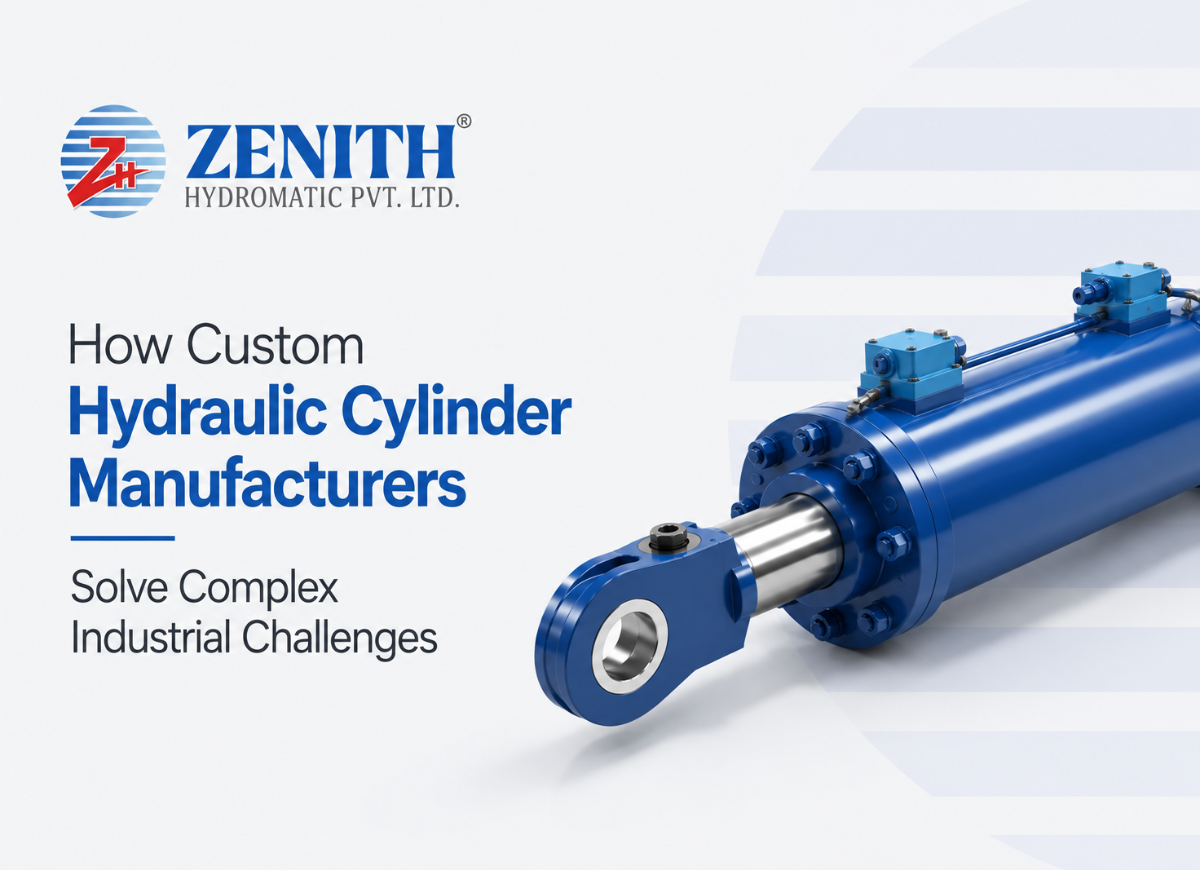
Some engineering problems don’t have a catalog answer. When a machine has to work in extreme heat, corrosive air, or a space barely large enough to fit a component, standard parts run out of options fast. That’s usually when engineers call in hydraulic cylinder manufacturers who specialize in solving the problem from scratch.
Custom engineering isn’t just about resizing a standard cylinder. It means rethinking materials, seals, tolerances, and sometimes the whole design approach to fit conditions no off-the-shelf part was built for.
This article looks at the kinds of complex challenges these manufacturers actually solve, how the engineering process works, and why this capability matters more as industrial demands keep growing.
What Makes an Industrial Challenge “Complex”?
A challenge becomes complex when more than one constraint has to be solved at the same time. Extreme pressure alone is solvable. Extreme pressure combined with tight space, corrosive fluid exposure, and a strict weight limit is a different problem entirely.
These are exactly the situations where a standard catalog cylinder falls short, and where custom engineering earns its cost.
It’s also where the difference between an average manufacturer and a genuinely capable one becomes obvious, since anyone can resize a part, but not everyone can redesign one.
How Custom Manufacturers Approach Complex Problems
Rather than starting with a stock design, engineers start with the actual operating conditions. That includes load, cycle frequency, environment, available space, and any regulatory requirements specific to the industry.
From there, material selection, seal type, bore and rod sizing, and mounting configuration are worked out together, since changing one usually affects the others.
Real Engineering Challenges Custom Manufacturers Solve
A look at the specific problems that come up most often shows why customization matters in practice, not just in theory.
Extreme Pressure and Load Requirements
Heavy presses, structural lifting equipment, and large mobile cranes need cylinders rated well beyond typical catalog pressure ratings. Engineers address this through reinforced barrel construction and rod material selection rather than simply upsizing a standard part.
Corrosive and Offshore Environments
Saltwater exposure and chemical processing environments demand specialized coatings and corrosion-resistant alloys. Equipment built for oil and gas applications often needs to meet standards set by the American Petroleum Institute, which publishes widely adopted specifications covering equipment used in exploration, production, and offshore operations.
Space-Constrained Machine Designs
Some machines simply don’t have room for a standard cylinder envelope. Engineers solve this with custom mounting configurations and compact bore-to-stroke ratios that fit the available space without sacrificing force output.
Extreme Temperature Operation
Foundries, furnaces, and cold storage equipment push seals and hydraulic fluid outside their normal operating range. Custom builds use high-temperature or low-temperature rated seal compounds specifically selected for the application.
High-Precision, Repeatable Motion
Automated assembly and stamping equipment need cylinders that behave identically across thousands of cycles. This requires tighter manufacturing tolerances than standard parts typically offer.
Contamination-Prone Environments
Mining, agriculture, and construction equipment all face heavy dust and debris exposure. Reinforced wiper seals and enhanced filtration are built into the design rather than added as an afterthought.
Regulatory and Safety Compliance
Certain industries require documented compliance with recognized safety standards, such as ISO 4413, which covers general rules and safety requirements for hydraulic fluid power systems. Custom manufacturers build compliance into the design process rather than testing for it after the fact.
Vibration and Shock Loading
Mobile equipment and off-road machinery expose cylinders to constant vibration and sudden shock loads that standard designs aren’t always rated for. Reinforced rod bearings and modified seal grooves help these cylinders handle repeated impact without premature wear.
Multi-Cylinder Synchronization
Some applications, like large presses or lifting platforms, need several cylinders to move in exact sync. Getting this right often means custom-matching internal tolerances across a set of cylinders, not just building each one to the same nominal spec.
The Engineering Process Behind a Custom Solution
Most reliable manufacturers follow a similar sequence when developing a custom cylinder, even if the details vary by project.
- Requirement gathering: understanding actual load, environment, space, and compliance needs
- Concept design: working through material, seal, and dimensional options together
- Prototyping: building a first unit to validate the design before full production
- Testing: pressure, leak, and endurance testing under simulated operating conditions
- Production and documentation: manufacturing at scale with traceable records for future servicing
Skipping steps in this sequence, especially prototyping and testing, is where most custom cylinder failures actually originate.
A common example: a crusher application needing both high pressure and heavy contamination resistance might go through two or three prototype revisions before the seal and filtration combination performs as expected under real dust exposure.
Why This Capability Matters More as Demands Grow
Industrial equipment keeps getting pushed into harsher conditions and tighter design envelopes as machines get more specialized. That trend increases how often standard parts simply don’t fit the job.
Businesses evaluating hydraulic cylinder manufacturers in india for these kinds of projects are increasingly looking for engineering depth, not just manufacturing capacity, since the hardest part of a complex order is usually the design work before the first cylinder is even built.
That shift in expectations is pushing manufacturers to invest more in in-house engineering teams rather than relying purely on production scale to win business.
Buyers benefit from this shift too, since a manufacturer with strong engineering capability can usually solve a problem in-house instead of pushing revisions back and forth over weeks.
FAQs
What kinds of industries need custom-engineered hydraulic cylinders?
Oil and gas, mining, marine, heavy construction, and precision manufacturing are among the industries most likely to need engineering beyond a standard catalog cylinder, since their operating conditions rarely match generic specifications.
How is a complex custom cylinder different from a standard custom order?
A standard custom order usually adjusts bore, stroke, or mounting from an existing design. A complex order often requires solving multiple constraints together, like pressure, environment, and space, at the same time.
Why does prototyping matter for complex hydraulic cylinder projects?
Prototyping catches design issues before full production, which is far cheaper than discovering a flaw after a batch of cylinders has already been manufactured and installed.
Do custom cylinders for oil and gas need special certification?
Often, yes. Equipment used in exploration and offshore operations frequently needs to meet API standards, depending on the specific application and region.
How long does it take to engineer a complex custom cylinder?
Timelines vary significantly with complexity, but projects involving multiple constraints typically take longer than simple dimensional customization, often several weeks to a few months.
What’s the biggest risk in complex custom cylinder projects?
Skipping proper prototyping and testing to save time is the most common source of problems, since issues that seem minor on paper often only show up under real operating conditions.
Key Takeaways
- Complex industrial challenges usually involve multiple constraints at once, not just one difficult specification
- Custom manufacturers solve these through coordinated decisions on material, seal, and dimensional design
- Extreme pressure, harsh environments, tight space, and precision motion are the most common challenges
- A structured engineering process, including prototyping and testing, reduces the risk of costly design failures
- Engineering depth is becoming as important as manufacturing capacity when evaluating a custom cylinder supplier
Conclusion
The hardest hydraulic cylinder problems rarely have an off-the-shelf answer. They need a manufacturer willing to work through the constraints from the ground up, not just adjust a standard size.
That kind of engineering work takes longer and costs more upfront than picking a catalog part. It also tends to be the difference between equipment that performs reliably for years and equipment that keeps coming back for repairs.
If you’re working through a demanding application, partnering with an experienced manufacturer like Zenith Hydromatic can help you turn a difficult specification into a working solution instead of a compromise.