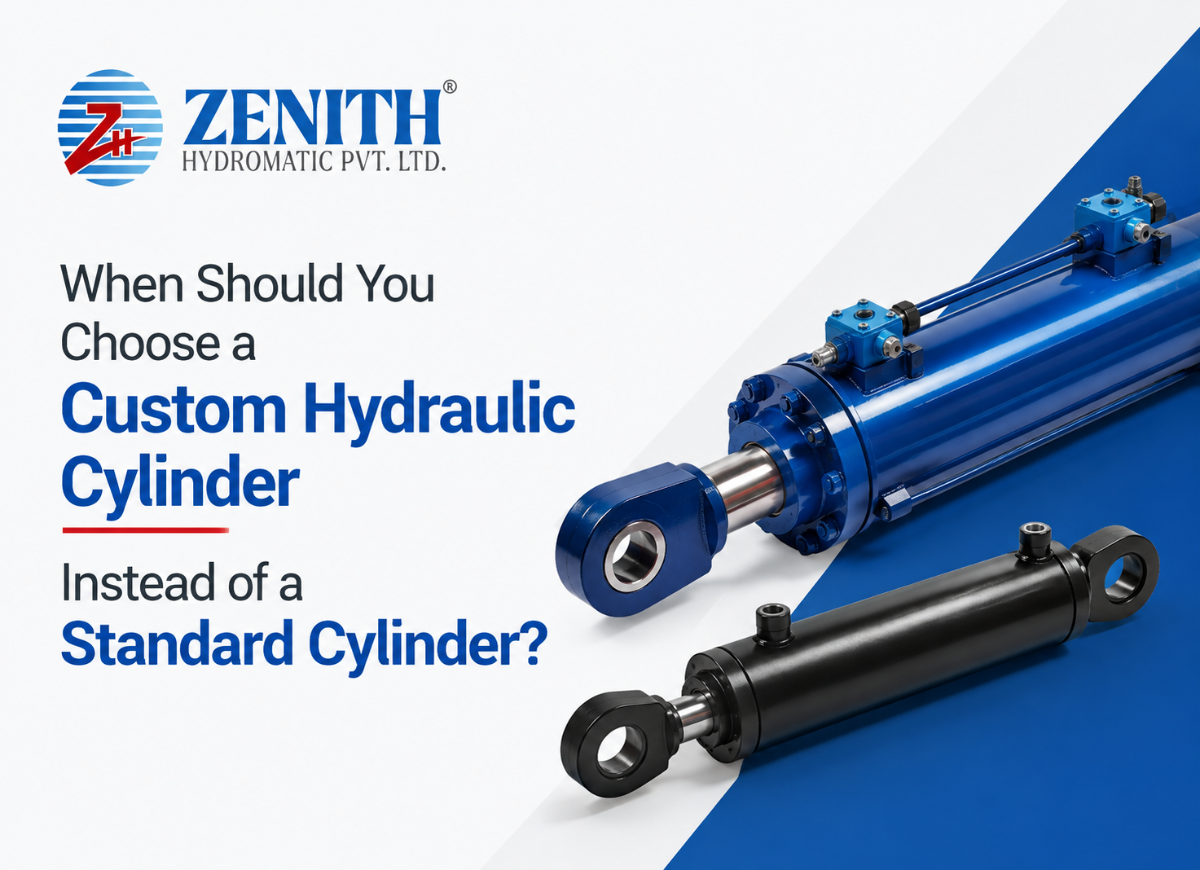
Not every application needs a custom hydraulic cylinder. Plenty of machines run fine on a standard, catalog-sized unit, and paying extra for customization in those cases is just wasted money.
The trouble is knowing which category your project actually falls into. Get it wrong one way, and you overpay for a spec you didn’t need. Get it wrong the other way, and you install a cylinder that wears out fast or never fits properly.
This article walks through the specific signs that point toward custom, the situations where standard still makes sense, and what changes in cost and lead time once you go custom.
None of this needs to be complicated. A handful of clear signals usually settle the question long before you get a quote.
Standard vs Custom: The Basic Difference
A standard hydraulic cylinder is built to common catalog dimensions, bore sizes, and stroke lengths that suit a wide range of general applications. It’s manufactured in volume, which keeps cost and lead time down.
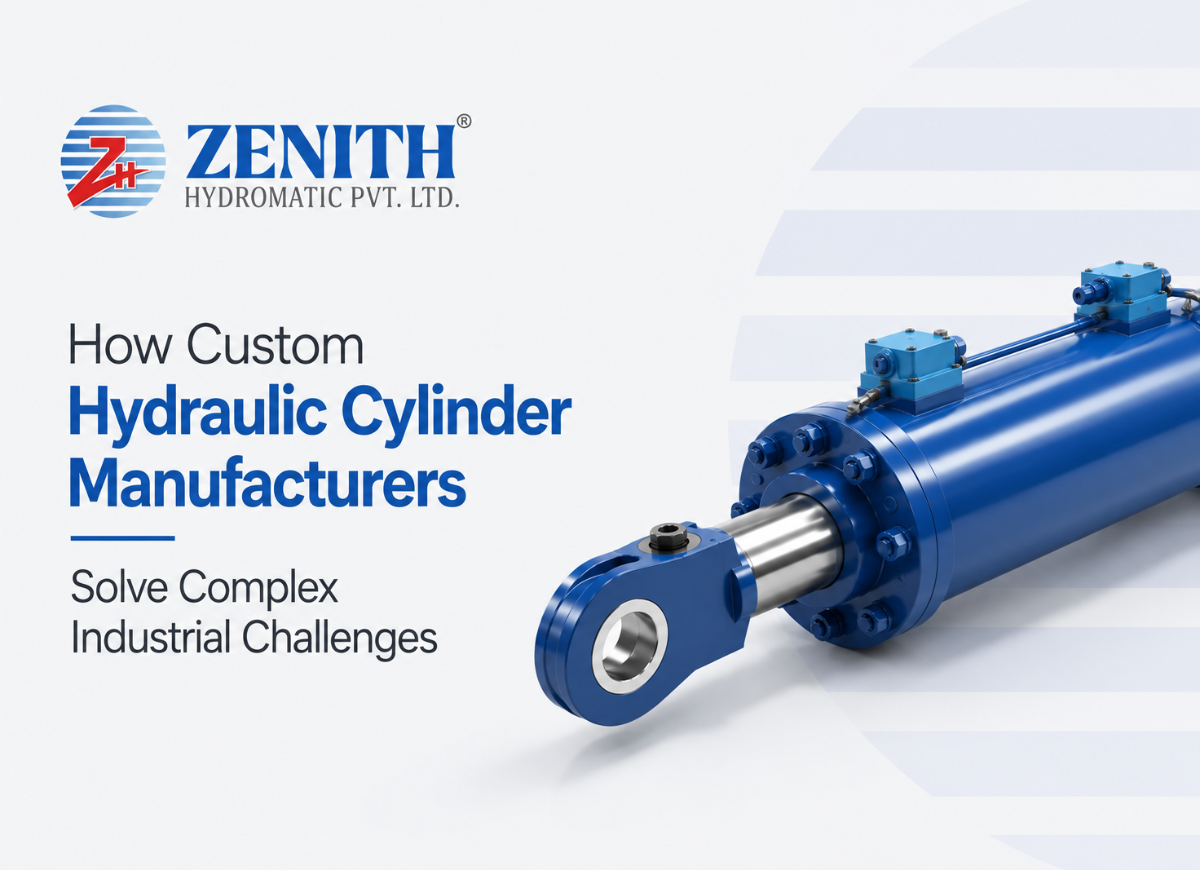
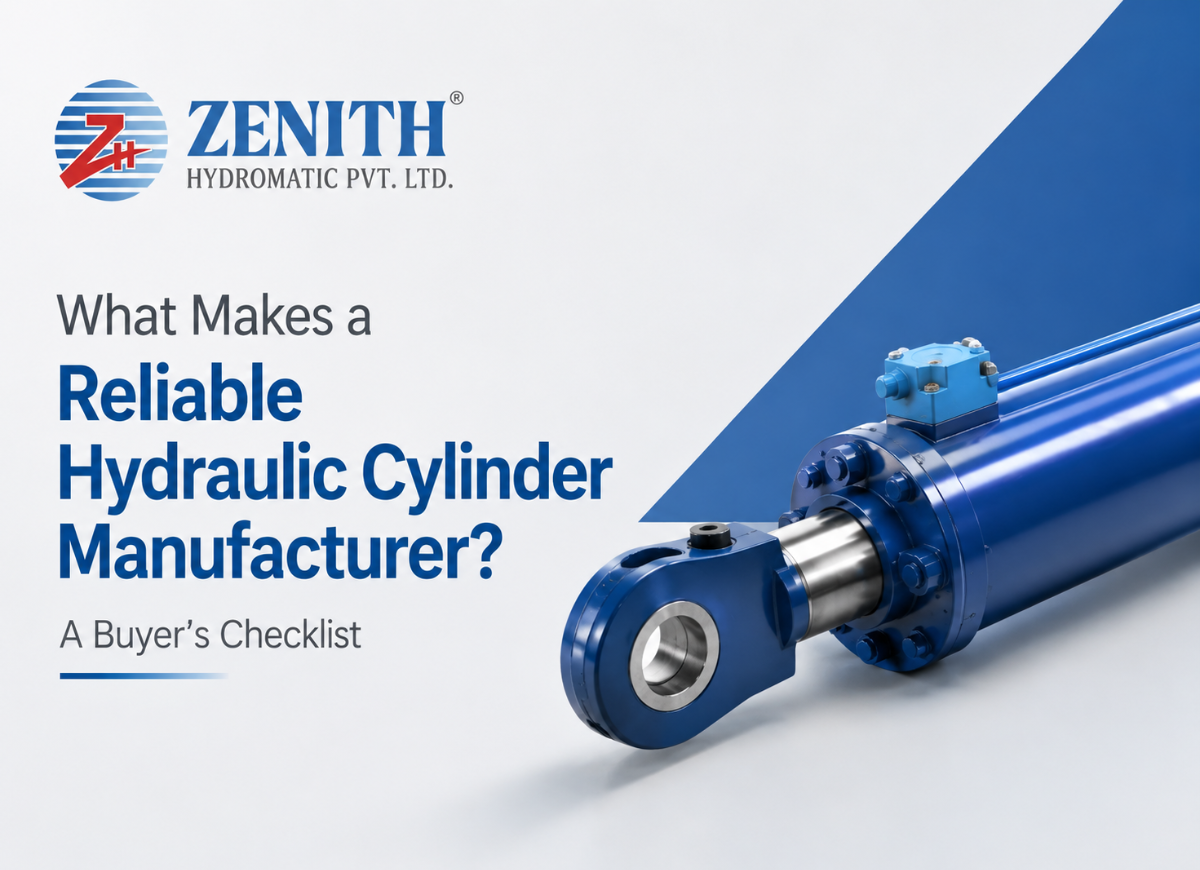
A custom hydraulic cylinder is designed around one specific machine’s load, space, and environmental requirements. It costs more and takes longer to build, but it fits conditions a standard part simply can’t handle.
When a Standard Cylinder Is the Right Choice
Custom isn’t automatically better. For a lot of applications, standard is the more sensible choice.
- The application involves common, well-understood loads and cycle rates
- Mounting dimensions and stroke length match an existing catalog size
- Operating environment is mild, indoor, and free of unusual contamination or chemical exposure
- Budget or timeline doesn’t allow for a longer custom lead time
- Spare parts availability and quick replacement matter more than a perfect fit
When You Should Choose a Custom Hydraulic Cylinder
A handful of specific signs usually mean it’s time to move away from a catalog part.
Your Machine Has Unusual Load or Pressure Requirements
If the required force or pressure rating falls outside what standard catalog sizes offer, a custom build is often the only real option. Forcing a standard cylinder to handle loads it wasn’t rated for shortens its service life significantly.
Space Constraints Rule Out Standard Dimensions
When a machine’s design leaves an odd, tight, or unusually shaped space for the cylinder, custom mounting and envelope dimensions solve a problem no catalog part is built to handle.
The Operating Environment Is Extreme or Corrosive
Saltwater exposure, high heat, or heavy chemical contact all call for specific seal materials and coatings. Standard cylinders are built for general conditions, not extremes.
You Need Compliance With Specific Industry Standards
Some industries require documented compliance with recognized safety standards, such as ISO 4413, which covers general rules and safety requirements for hydraulic fluid power systems. Custom builds let engineers design compliance in from the start, rather than retrofitting a standard part to meet requirements it wasn’t built for.
Standard Sizes Cause Repeated Downtime or Failures
If a standard cylinder keeps failing early or needing frequent repair in the same application, that’s usually a sign the part is mismatched, not defective. Switching to a custom spec often resolves the pattern.
You’re Designing a New or Unusual Machine
Original equipment design frequently calls for custom cylinders from the start. Grand View Research reports that mobile equipment applications, which often involve unique machine configurations, account for over half of total hydraulic cylinder demand, a category where standard catalog fit is often the exception rather than the rule.
You Need a Specific Response Speed or Motion Profile
Some applications need cylinder motion that’s faster, slower, or more tightly controlled than a general-purpose part is designed for. Automated machinery and precision equipment often fall into this category, where standard response times simply aren’t accurate enough.
You’re Ordering in Volume for a Product Line
If you’re building multiple units of the same machine, a custom design tailored to that specific application can actually reduce long-term costs once volume is high enough to offset the initial design investment.
Cost and Lead Time: What Changes With Custom
Going custom isn’t just a design decision, it changes the buying process too.
| Factor | Standard Cylinder | Custom Cylinder |
| Lead time | Days to a couple weeks | Several weeks to a few months |
| Upfront cost | Lower | Higher |
| Design flexibility | Limited to catalog options | Built around exact requirements |
| Spare parts | Widely available | May require manufacturer-specific stock |
| Best for | Common, well-defined applications | Unusual load, space, or environment needs |
A Simple Decision Checklist
If you’re still unsure, run through this list. Answering yes to two or more points usually means custom is worth considering.
- Does the required pressure or flow rate fall outside standard catalog ranges?
- Does the mounting space have unusual dimensions or constraints?
- Is the operating environment extreme, corrosive, or heavily contaminated?
- Does your industry require documented compliance with specific safety standards?
- Have standard cylinders failed repeatedly in this exact application before?
How Manufacturers Support This Decision
A good manufacturer won’t just take your order, they’ll help you figure out whether custom is actually necessary before quoting one.
Several established custom hydraulic cylinder manufacturer teams review the actual application details before recommending a build, since pushing an unnecessary custom order helps no one long-term.
Businesses looking for a custom hydraulic cylinder manufacturer in ahmedabad should expect this kind of consultation as part of the quoting process, not an extra step reserved for larger orders.
FAQs
Is a custom hydraulic cylinder always better than a standard one?
No. Standard cylinders work well for common, well-understood applications. Custom is worth the extra cost and lead time only when standard sizes genuinely don’t fit the load, space, or environment.
How much more does a custom hydraulic cylinder cost?
It varies by complexity, but custom builds are generally more expensive upfront due to design work, tooling, and lower production volume compared to catalog parts.
How long does it take to get a custom hydraulic cylinder built?
Typically several weeks to a few months, depending on design complexity, compared to days or a couple weeks for many standard sizes.
Can a standard cylinder be modified instead of ordering a full custom design?
Sometimes. Minor modifications like different mounting brackets or seal materials can sometimes be added to a standard base design without a full custom engineering process.
What’s the biggest risk of using a standard cylinder in the wrong application?
Premature wear and repeated failure are the most common issues, usually caused by pressure, environmental, or space mismatches the standard design wasn’t built to handle.
Should I ask a manufacturer whether I actually need a custom cylinder?
Yes. A manufacturer with genuine engineering experience should be willing to review your application and tell you honestly if a standard size would work just as well.
Key Takeaways
- Standard cylinders suit common loads, mild environments, and situations where lead time or budget matters most
- Custom hydraulic cylinders make sense for unusual pressure needs, tight space constraints, extreme environments, or compliance requirements
- Repeated failures with a standard cylinder in the same application usually signal a mismatch, not a defect
- Custom builds cost more and take longer, but often cost less over the equipment’s full service life
- A good manufacturer will help confirm whether custom is genuinely necessary before quoting one
Conclusion
The right choice between standard and custom comes down to how well your application actually matches a catalog spec. When it does, standard saves time and money. When it doesn’t, custom is what keeps the equipment running the way it should.
If you’re weighing this decision for an upcoming project, working with an experienced manufacturer like Zenith Hydromatic can help you figure out which option actually fits, before you commit to either one.