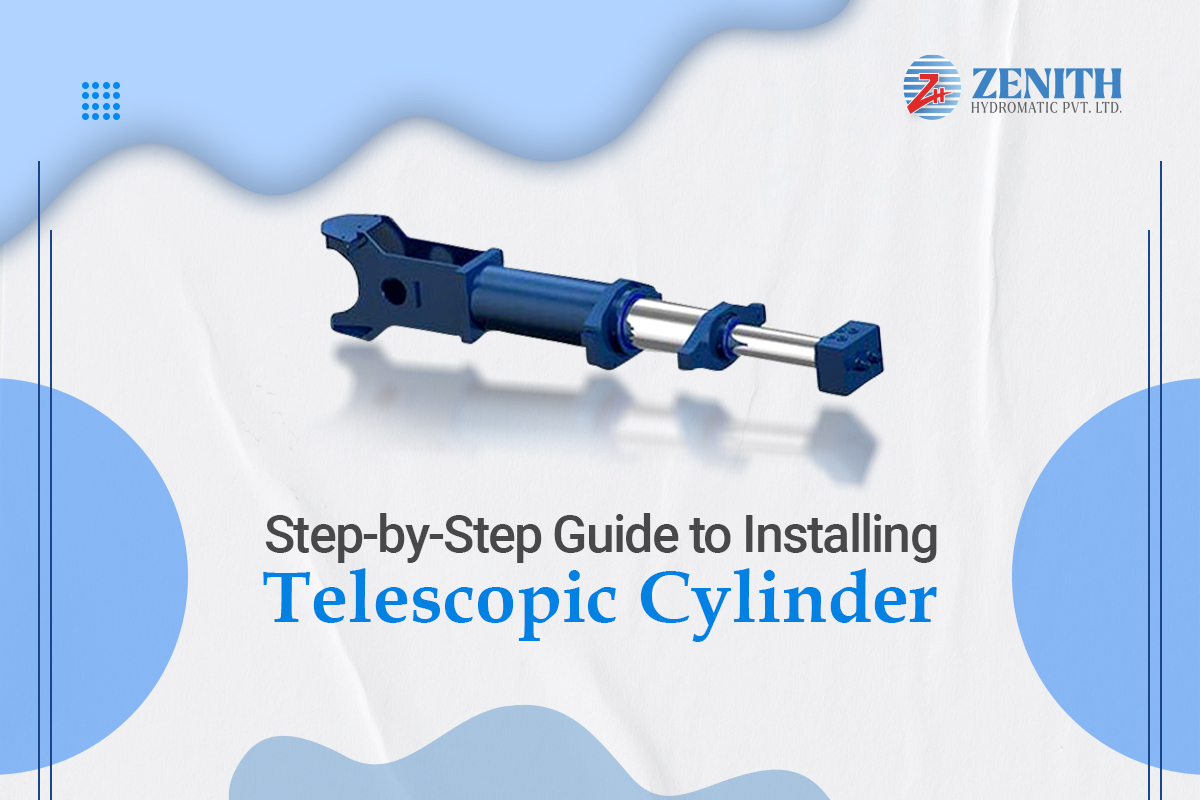
Telescopic cylinders are widely used in applications requiring long stroke lengths but compact retraction, such as dump trucks, cranes, and industrial lifting equipment. Their unique multi-stage design allows for smooth, controlled extension, making them ideal for heavy-duty tasks where space is limited.
Correct installation of a telescopic hydraulic cylinder is essential to ensure safe operation, maximum efficiency, and long service life. This step-by-step guide will walk you through the key installation stages, essential tools, and best practices to help you get it right the first time.
1. Understanding the Basics of Telescopic Cylinders
Before installation, it’s crucial to understand the design and function. A telescopic cylinder consists of multiple nested stages, each progressively smaller in diameter. As hydraulic pressure is applied, these stages extend sequentially, providing greater reach in a compact design.
Applications range from transportation and waste management to construction and agriculture, where high force and compact storage are equally important.
2. Preparation Before Installation
Successful installation starts with thorough preparation:
- Review the Manufacturer’s Specifications – Always check pressure ratings, mounting dimensions, and stroke lengths.
- Inspect the Cylinder – Ensure there are no visible damages or leaks before starting.
- Prepare the Mounting Area – Clean and clear the installation site to prevent contamination.
- Gather Necessary Tools – Common tools include wrenches, torque tools, lifting equipment, hydraulic hoses, and safety gear.
3. Step-by-Step Installation Process
Here’s a detailed breakdown of the installation procedure:
Step 1: Position the Cylinder
- Place the cylinder in its intended mounting position.
- Use lifting equipment for heavy units to avoid injury or misalignment.
Step 2: Secure the Base Mount
- Attach the cylinder base to its mounting bracket.
- Ensure alignment to prevent uneven wear or bending during operation.
- Tighten bolts to the torque specifications provided.
Step 3: Connect the Hydraulic Lines
- Attach hydraulic hoses to the correct ports as per the cylinder diagram.
- Use clean, compatible hydraulic fluid to prevent damage.
- Make sure all fittings are tight but avoid over-tightening to prevent thread damage.
Step 4: Align the Rod End
- Connect the rod end of the cylinder to the machine’s moving part.
- Maintain proper alignment to ensure smooth extension and retraction.
Step 5: Fill and Bleed the System
- Fill the hydraulic reservoir with clean fluid.
- Operate the system slowly to remove air from the cylinder and hoses.
- Continue bleeding until all air bubbles are eliminated.
Step 6: Test the Cylinder
- Extend and retract the cylinder several times at low speed.
- Check for smooth movement, leaks, and unusual noises.
- Make adjustments if necessary before full-load operation.
4. Safety Tips During Installation
- Always depressurize the system before connecting or disconnecting hoses.
- Wear appropriate PPE such as gloves, goggles, and safety boots.
- Never exceed the rated pressure or stroke length.
- Keep hands and tools away from moving parts during testing.
5. Post-Installation Maintenance
Regular maintenance helps extend the life of your telescopic cylinder:
- Inspect for leaks and damage after each use.
- Check mounting bolts and hydraulic connections regularly.
- Replace worn seals promptly to prevent fluid loss.
- Maintain fluid cleanliness to avoid contamination-related failures.
Conclusion
Installing a telescopic hydraulic cylinder correctly is critical for safe, reliable, and efficient performance. By following the proper steps—preparation, mounting, hydraulic connection, alignment, bleeding, and testing—you can ensure your equipment operates smoothly and avoids costly downtime.
For durable, precision-engineered hydraulic solutions designed to meet demanding industrial needs, Zenith Hydromatic offers expertise you can trust.
Relevant FAQs (People Also Ask)
- What are telescopic cylinders used for?
They are commonly used in dump trucks, cranes, agricultural machinery, and other applications requiring long stroke lengths and compact storage. - How do you install a telescopic cylinder?
Installation involves securing the base, aligning the rod end, connecting hydraulic lines, bleeding the system, and testing for proper operation. - How do you maintain a telescopic hydraulic cylinder?
Regularly inspect for leaks, check fluid cleanliness, tighten mounting bolts, and replace worn seals to ensure long service life. - What fluid is used in telescopic cylinders?
High-quality hydraulic fluid compatible with the system’s seals and temperature requirements is recommended.